

Incontinence Testing in Charleston: What Women Should Expect
Incontinence testing helps your doctor understand the reasons for urinary leakage and what kind of bladder problem you may have. This usually involves discussing your symptoms, a physical exam, urine testing, measuring how your bladder works, and sometimes other steps depending on your situation.
Medical Disclaimer: This page is for general information only and does not replace medical advice. For diagnosis or treatment of urinary leakage, consult a qualified women’s health provider who can look at your specific symptoms, health background, medicines, and risk factors.
Urinary leakage can happen during activity, like exercise, coughing, laughing, sneezing, or when you suddenly need to urinate and can't make it to the restroom. Although incontinence is common, it is not something you have to accept as a normal result of aging, childbirth, or menopause. Seeing a doctor through gynecology services in Charleston can help identify what is causing your symptoms and if further testing is needed.
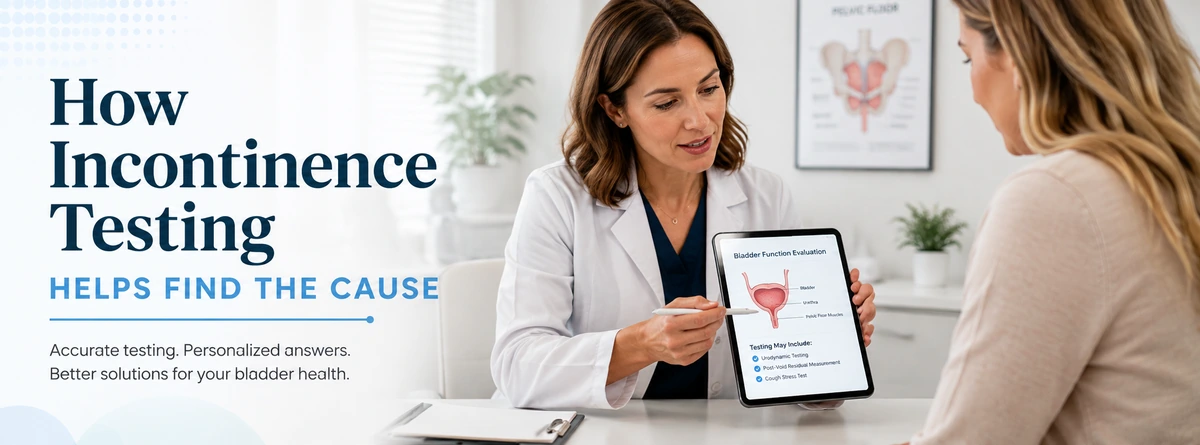
Why Incontinence Testing May Be Recommended
Urinary leakage can happen for different reasons. Some people have stress incontinence, which causes leakage when coughing, sneezing, lifting, or exercising—anything that puts pressure on the bladder. Others have urge incontinence, where there is a sudden and strong need to urinate. Many women have a mix of both types.
The purpose of testing is not just to confirm leakage. Your doctor uses the evaluation to find out when your symptoms happen, how often they occur, what triggers them, and whether another health issue could be involved.
What Happens During the First Evaluation?
Your first visit usually starts with a conversation about your symptoms and health history. The doctor might ask when you first noticed leakage, how often it happens, if you feel an urge before it, how frequently you go to the bathroom, and whether your symptoms affect your daily life—like work, exercise, sleep, or travel.
You may also be asked about pregnancies, deliveries, menopause, past pelvic surgeries, what medicines you take, urinary tract infections, and how much fluid you drink. Bringing a current medication list and being honest about your symptoms will help the doctor understand your situation better. You can learn more about the physicians who provide care by visiting the Charleston Women’s Wellness Center providers page.
What Types of Incontinence Testing May Be Used?
The exact tests you get depend on your symptoms and health history. Not everyone needs all tests. Your provider may start by testing your urine for infection or other problems. A physical or pelvic exam may also be done. You might be asked to keep a bladder diary to track when you go to the bathroom, how much fluid you drink, and any leakage episodes.
The goal is to collect enough information to understand your symptoms, rather than guessing based only on the fact that leakage is happening.
Most parts of an incontinence evaluation are noninvasive, like talking about your symptoms, giving a urine sample, or filling out a bladder diary. Some special bladder tests may use temporary equipment or measurements that might feel new or a little uncomfortable.
Your doctor should explain which tests are recommended, why they are helpful, and what will happen before anything begins. If you have concerns about discomfort, privacy, or past medical experiences, bring them up ahead of time so your provider can address them.
What Can the Results Tell You?
Testing helps your doctor find out if your symptoms are from stress incontinence, urge incontinence, a mix of types, incomplete bladder emptying, or another bladder or pelvic problem. Sometimes, testing shows that more tests might be needed.
There is no single treatment that works for everyone. The next steps depend on your symptoms, health, medicines, lifestyle, medical history, and your own goals.

Why This Matters
Bladder leakage can affect your life beyond just bathroom habits. Some people avoid exercise, travel, social events, or places without easy restroom access. Understanding the cause helps you and your provider plan your next steps, rather than constantly changing your routine to cope.
Common Mistakes
- Thinking urinary leakage is something every woman must accept.
- Delaying talking to a doctor until symptoms seriously disrupt daily life.
- Trying to figure out the cause using only online information—different types of incontinence can look similar.
- Cutting back on fluids too much to control leakage, instead of discussing options with a healthcare provider.
Best Practices Before Your Appointment
- Keep a record of when leakage happens and what you were doing at the time.
- Track if leakage happens after a sudden urge or during activities like coughing, sneezing, lifting, or exercise.
- Bring an updated list of your medications and supplements.
- Be prepared to talk about any pregnancies, deliveries, pelvic surgeries, urinary infections, or menopause symptoms that may be relevant.
- Write down questions you have about the recommended testing and what the results could show.
Local Incontinence Evaluation in Charleston
If you are in Charleston, North Charleston, Moncks Corner, Mount Pleasant, Summerville, West Ashley, Johns Island, Goose Creek, or nearby Lowcountry areas, Charleston Women’s Wellness Center can help with bladder control concerns. Check their office information for directions, hours, or location details before you make an appointment.
When to Contact a Women’s Health Provider
Schedule a checkup if you keep having urinary leakage, if it is getting worse, disturbing your sleep or exercise, lowering your confidence, or changing your daily routine. If you have pain when urinating, blood in your urine, trouble emptying your bladder, repeated urinary infections, or new symptoms, see a healthcare provider.
You can also learn more about the physicians and care team by visiting the Charleston Women’s Wellness Center provider page.
Final Thoughts
The point of incontinence testing is to get useful information, not just to put a label on bladder leakage. A careful evaluation helps your doctor understand your symptoms and discuss options that fit your health history and goals. If bladder leakage is affecting your daily life or comfort, contact Charleston Women’s Wellness Center to see if a visit could help.
Frequently Asked Questions
What happens during incontinence testing?
Testing often begins by talking about your symptoms and health history. Your doctor may then do urine tests, a physical exam, measure how your bladder works, ask you to keep a diary, or use other tests depending on what you need.
How do doctors determine what type of incontinence I have?
Doctors look at when leakage happens, whether it is tied to activity or sudden urges, your health history, exam findings, and test results. These details help them figure out if you have stress, urge, mixed, or another bladder issue.
Is urinary leakage a normal part of getting older?
Urinary leakage is more common with age, but you do not have to live with it without a checkup. Your doctor can help discover if a bladder, pelvic floor, medicine, or other health issue is the cause.
Should I keep a bladder diary before my appointment?
A bladder diary is helpful for tracking bathroom visits, how much you drink, urgency, and leakage episodes. Ask your doctor if you should keep one before or after your first visit.
Where can I get evaluated for incontinence in Charleston?
If you have bladder leakage, you can discuss your symptoms at Charleston Women’s Wellness Center. The best evaluation depends on your symptoms, medical history, medicines, and other health factors.
Important Medical Disclaimer: This article is for general education only and is not meant to diagnose, treat, cure, or prevent any medical condition. It should not replace an exam, diagnosis, or advice from a certified healthcare provider. Urinary leakage and other bladder symptoms can have many causes, and the right testing or treatment depends on your symptoms, medical history, medications, age, and risk factors. If you have new, ongoing, worsening, or concerning symptoms, contact a qualified women’s health provider. Get medical help right away if you have severe pain, cannot urinate, see blood in your urine, have a fever with urinary symptoms, or have other symptoms that may need urgent care.