

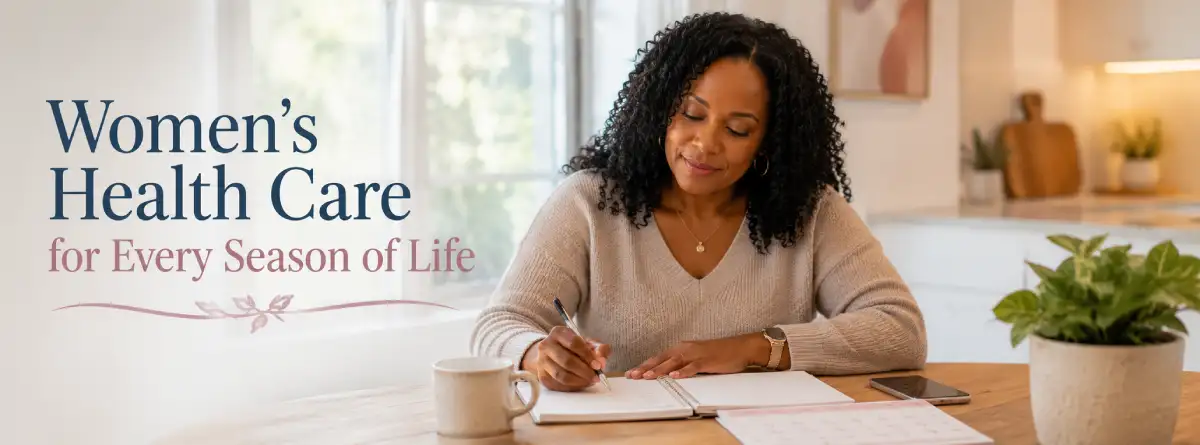
Women’s Health Care for Every Season of Life
Women’s health care in Charleston may include routine gynecological exams, preventive screenings, discussions about menopause, hormone evaluations, weight management strategies, bone density assessments, and support for symptoms that disturb daily living. The appropriate care depends on your age, medical history, current symptoms, medications, family background, and personal health goals.
Women’s health care is ongoing, not limited to one visit or phase. It may begin with preventive checkups and cycle-related questions, proceed through pregnancy preparation or contraception, and eventually address perimenopause, menopause, bone health, bladder issues, weight fluctuations, and complete wellness planning. For residents in Charleston, Moncks Corner, and the surrounding Lowcountry, gynecology services help you remain aware and recognize when to seek attention.

Women’s health priorities evolve. Younger patients may seek help for period management, contraception, pelvic pain, infections, Pap smears, or preventive exams. Midlife women often ask about sleep disturbances, mood changes, hot flashes, weight gain, libido, vaginal dryness, or cycle irregularity. Later, focus commonly shifts to postmenopausal symptoms, bone density, bladder control, breast health, and keeping up with essential screenings.
Schedule routine health visits to review symptoms, update your medical history, ask questions, and discuss screening needs before issues become harder to address. Not every visit requires the same tests, and not every symptom signals a serious problem. Building a regular relationship with a women’s health provider helps you decide what’s normal, what requires monitoring, and what needs evaluation.
Perimenopause and menopause can alter sleep, temperature regulation, mood, weight, intimacy, concentration, and daily comfort. Some women have mild symptoms. Others feel like their bodies have changed quickly. A focused visit on menopause and hormone care lets you discuss symptoms, health history, treatment options, non-hormonal choices, and whether more evaluation is appropriate.
Effective women’s health care eliminates uncertainty about your body. It offers a dedicated place to voice concerns, discuss changes openly, and make well-informed choices based on your individual history, rather than relying on online sources. Whether your concern is regular screening, menopause, weight shifts, pelvic pain, urinary leakage, or bone health, your goal is to understand the issue and determine the next step using solid information.
Common Mistakes
- Assuming symptoms are “just aging” without discussing changes that are new, persistent, painful, worsening, or affecting daily life.
- Waiting too long to ask about irregular bleeding, pelvic pain, breast changes, bladder leakage, or postmenopausal bleeding.
- Using online advice as a replacement for personal medical guidance.
- Forgetting to bring an updated medication list, supplement list, screening history, or symptom notes to an appointment.
Best Practices
- Track symptoms before your visit, including when they started, how often they happen, and what makes them better or worse.
- Ask which screenings are appropriate for your age, health history, family history, and risk factors.
- Bring a list of medications, supplements, prior surgeries, allergies, and major health changes.
- Speak up about concerns that feel embarrassing, including bladder leakage, sexual discomfort, vaginal dryness, mood changes, or weight concerns.
Women in Charleston, North Charleston, Moncks Corner, Mount Pleasant, Summerville, West Ashley, Johns Island, Goose Creek, Berkeley County, Charleston County, and neighboring Lowcountry communities regularly juggle careers, caregiving, family obligations, and personal health. Convenient access to Charleston and Moncks Corner office locations supports routine care, lessening the likelihood of delaying symptoms or screenings.
Contact a women’s health provider if you have new or worsening pelvic pain, unusual bleeding, postmenopausal bleeding, breast changes, frequent urinary leakage, painful intercourse, severe menopause symptoms, unexplained weight changes, or symptoms that interfere with sleep, work, comfort, or daily life. You should also schedule care if you are unsure about screenings, contraception, hormone therapy, or bone health, or if you need wellness planning.
Women’s health care should feel clear, personal, and useful at every stage of life. If you have questions about routine gynecology care, menopause symptoms, preventive screenings, weight management, bone health, or changes you struggle to explain, contact Charleston Women’s Wellness Center to find the right appointment for your needs.
Frequently Asked Questions
What does women’s health care include?
Women’s health care may include preventive visits, gynecology exams, Pap smear guidance, menstrual concerns, menopause questions, hormone-related symptoms, breast health concerns, bone health, bladder symptoms, and wellness planning. The right care depends on age, symptoms, health history, and personal risk factors.
How often should I schedule a women’s health visit?
Many women benefit from regular preventive visits, but the timing of exams, screenings, and follow-up care depends on your age, health history, symptoms, past results, medications, and risk factors. A provider can help determine what schedule makes sense for you.
When should I ask about menopause symptoms?
You should ask about menopause or perimenopause symptoms when hot flashes, night sweats, sleep disruption, mood changes, vaginal dryness, cycle changes, or weight changes are persistent, worsening, or affecting daily life. A provider can review whether symptoms may be hormone-related or caused by something else.
Does Charleston Women’s Wellness Center see patients from Moncks Corner?
Yes. Charleston Women’s Wellness Center has offices in Charleston and Moncks Corner, making care more accessible to patients in Berkeley and Charleston counties and surrounding Lowcountry communities.
What should I bring to a women’s health appointment?
Bring your current medication and supplement list, allergies, medical history, prior surgeries, screening dates if known, insurance information, and notes about symptoms or questions. This helps your provider better understand your health needs.
This article provides general education and does not diagnose, treat, or replace medical advice from a licensed provider. Your age, symptoms, health history, medications, and personal risk factors determine women’s health needs, screening timing, and treatment options.