
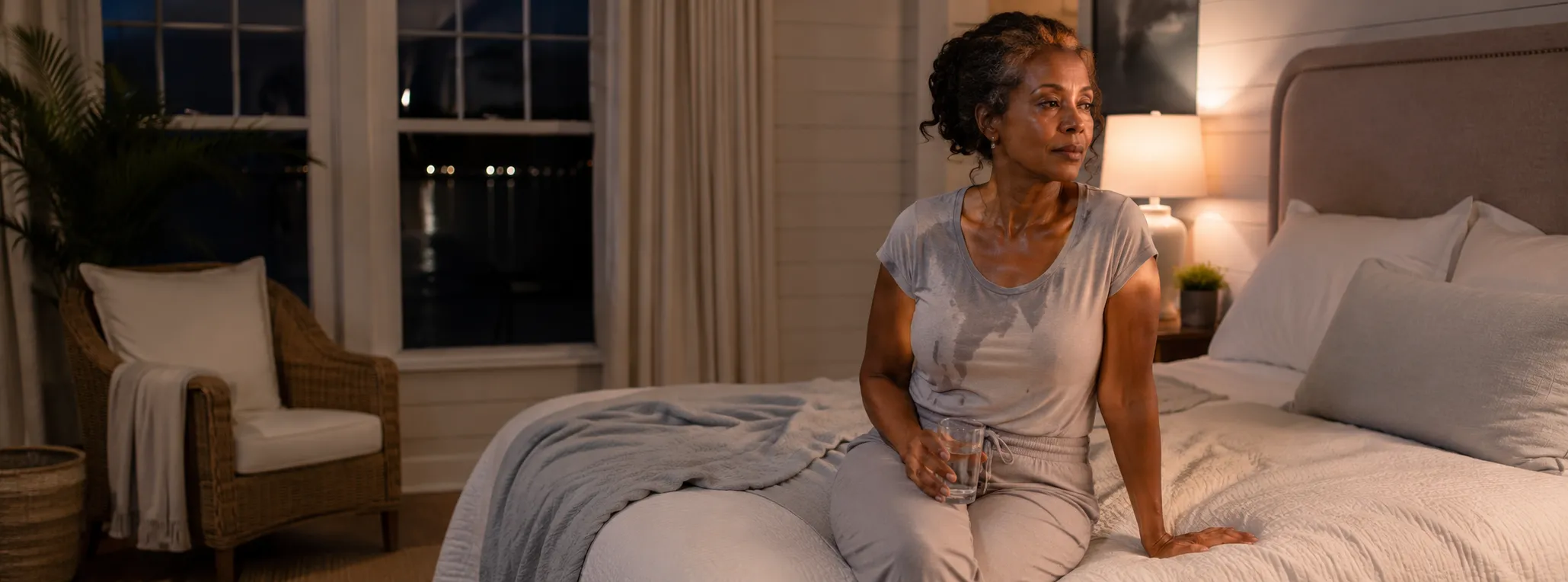
Night Sweats: Menopause or Something Else?
Quick Answer: Night sweats are often connected to perimenopause or menopause, especially if you also notice hot flashes, trouble sleeping, irregular periods, mood swings, or vaginal dryness. Other causes include medications, thyroid problems, infections, stress, your bedroom environment, or other health issues. What you should do next depends on your symptoms, age, health history, and how often you have night sweats.
Medical Note: This article is for general information only and does not replace medical advice. If your symptoms are new, severe, last a long time, or worry you, please see a qualified women’s health provider.
Waking up sweaty, too warm, or needing to change clothes at night can be frustrating and tiring. Many women in Charleston, Moncks Corner, and nearby areas wonder if their night sweats are caused by menopause or something else. At Charleston Women’s Wellness Center, we discuss these symptoms with women as part of our gynecology and women’s health care services.
Why Night Sweats Happen During Menopause
During perimenopause and menopause, hormone changes can affect how your body controls temperature. A hot flash at night can make you sweat, wake you suddenly, make you feel flushed, or even leave you feeling cold afterward. Some women have mild symptoms that come and go, while others have night sweats that wake them up several times a week and affect their energy, mood, focus, and comfort during the day.
It Is Not Always Menopause
Menopause is a common cause of night sweats, but it is not the only one. Room temperature, heavy blankets, alcohol, spicy foods, stress, some medications, thyroid problems, infections, and other health issues can also play a role. Rather than guessing, it helps to talk with a women’s health provider. They can look at your symptoms, medications, menstrual changes, medical history, and risk factors to decide if you need more evaluation.
What Details Are Helpful to Track?
If your night sweats are happening more often, try to keep track of when they occur, how often they wake you up, if you need to change clothes or sheets, and any other symptoms you notice at the same time. Also note any changes in your periods, hot flashes during the day, trouble sleeping, new medications, weight changes, fever, pelvic pain, unusual bleeding, or mood changes. Bringing these notes to your appointment can help your provider better understand your situation.

Why This Matters
It is important to address night sweats because good sleep is essential to your health. If your sleep is often interrupted, it can affect your energy, patience, focus, work, relationships, and overall quality of life. Even if menopause is the reason, you do not have to put up with symptoms that disturb your nights. Talking with your provider can help you decide if lifestyle changes, medical evaluation, menopause care, or another step is right for you.
Common Mistakes
- Assuming every night sweat is menopause without considering medications, thyroid concerns, infection, or other possible causes.
- Waiting too long to ask for help when symptoms are frequent, worsening, or interfering with sleep.
- Relying only on online advice instead of discussing personal symptoms and health history with a provider.
- Ignoring night sweats that happen with unusual bleeding, unexplained weight loss, fever, chest pain, fainting, or other concerning symptoms.
Best Practices
- Track night sweats, sleep changes, menstrual changes, hot flashes, and any symptoms that happen at the same time.
- Bring a current medication and supplement list to your appointment.
- Tell your provider whether symptoms are mild, disruptive, new, persistent, or getting worse.
- Ask about menopause care, hormone therapy questions, nonhormonal options, and whether any testing is appropriate for your situation.
Local Relevance
Women in Charleston, North Charleston, Moncks Corner, Mount Pleasant, Summerville, West Ashley, Johns Island, Goose Creek, Berkeley County, Charleston County, and nearby areas often lead busy lives, making it easy to ignore symptoms. Charleston Women’s Wellness Center offers local support for women who want to talk openly about menopause symptoms, sleep problems, and next steps. You can look up our office information before making an appointment.
When to Contact a Women’s Health Provider
Contact a women’s health provider if your night sweats are new, frequent, severe, long-lasting, or affecting your sleep and daily life. You should also reach out if you have night sweats along with abnormal bleeding, pelvic pain, fever, unexplained weight loss, a racing heart, medication changes, or any symptoms that feel unusual for you. If you want to learn more about our practice and providers, you can meet Dr. Paula Orr online.
Final Thoughts
Night sweats can be a part of menopause, but if they are disturbing your sleep or making you worry about your health, it is important to look into them. You do not need to guess or panic. Try to understand what might be causing the problem and choose the right next step. If you have questions or want to schedule a visit, contact Charleston Women’s Wellness Center for friendly women’s health care in the Charleston area.
Frequently Asked Questions
Are night sweats always caused by menopause?
No. Menopause and perimenopause are common reasons for night sweats, but medications, thyroid changes, infections, sleep environment, stress, and other health concerns may also contribute.
When should I see a provider for night sweats?
Schedule an appointment if night sweats are new, frequent, severe, persistent, worsening, or disrupting sleep. It is also important to seek care if they happen with abnormal bleeding, fever, pelvic pain, unexplained weight loss, chest pain, or fainting.
Can hormone therapy help with menopause night sweats?
Hormone therapy may help some women with menopause-related hot flashes and night sweats, but it is not right for everyone. A provider can review your symptoms, medical history, risk factors, and goals before discussing options.
What should I track before my appointment?
Track how often night sweats happen, whether they wake you, menstrual changes, hot flashes, sleep problems, new medications, and any other symptoms that occur around the same time.
Does Charleston Women’s Wellness Center help with menopause symptoms?
Charleston Women’s Wellness Center provides women’s health care for patients with concerns such as menopause symptoms, night sweats, hot flashes, sleep changes, and related gynecologic questions.
Medical Disclaimer: This blog is for general educational purposes only and is not a substitute for medical advice, diagnosis, or treatment from a licensed healthcare provider. Symptoms such as night sweats can have different causes, so please contact Charleston Women’s Wellness Center or another qualified medical professional if your symptoms are new, persistent, worsening, or concerning.